Ironman Arizona Race Recap & Advice for Newbies

Last week I shared my experience of what it was like being the support crew for my brother, Scott Green, and sister-in-law, Jessica Mossman, as they competed in their first Ironman triathlon. Pure joy is the only way to describe it. You can read about it HERE if you missed my last post. This week I’m sharing Scott’s and Jess’ perspectives to round out their 2023 Ironman Arizona experience, letting you see what this event feels like through newbie eyes. You can take a peek at the Q & A below:

● WHAT DID PARTICIPATING IN IRONMAN ARIZONA MEAN TO YOU ON A PERSONAL LEVEL?

JESS: I was never really interested in long distance triathlon until Scott brought it up as something he wanted to accomplish for his 60th Birthday. I signed him up as a surprise Christmas present and I signed myself up as well so we could share the experience of training together. I knew if I didn’t train with him I would barely see him, LOL! I just wanted to share this really fun process with him, and along the way I found some things in this sport that I really love, and accomplished some things that I am really proud of. It ended up being a truly enriching experience for me.

As far as endurance sports go, every race is special to me. I use training for endurance sports as a way to nurture my physical and mental health. I use long training sessions as a way to get to know myself and force thought processes that can be easy to ignore when life gives you distractions like work, social media, tv etc. Every race I participate in is celebrating the work I put into myself as a physical and spiritual being. Training and racing has also been a phenomenal way to stay connected to myself through 6 years of sobriety and bouts of seasonal depression.

SCOTT: Having just turned 60 in this past year, it seems it can be a tricky gamble sometimes between pushing to a “next big challenge” (knowing you have parts wearing out) and selecting less risky races. I can say, with the encouragement I got from my family and coach, it was incredibly satisfying to go through a really great training block with a volume of training I never imagined. Additionally, to come out relatively injury free and then to be able to execute a race plan with no huge problems, is truly a wonderful feeling.

A couple that trains together learns to laugh a lot.

● CAN YOU SHARE SOME HIGHLIGHTS FROM YOUR RECENT RACE EXPERIENCE?

JESS: I think there were so many highlights during the race that it’s kind of hard to narrow it down to just one. One solo highlight would be coming out of the swim and realizing I just did THAT REALLY HARD THING on my own! One highlight with Scott would of course be crossing the finish line together.

SCOTT: Race specific highlights include the super nice weather and calm waters in Tempe Town Lake on race morning. A beautiful sunrise helped to calm the nerves.

CAN YOU PROVIDE DETAILS ABOUT THE RACE, SUCH AS SIGHTS, SOUNDS, SMELLS, OR ANYTHING ELSE THAT CAPTURES THE ESSENCE OF YOUR EXPERIENCE?

JESS: I don’t do a lot of “road races” and I can’t believe how amazing the support feels at an Ironman. I’m used to the quiet of an ultra marathon where you can be alone on the trail for hours. I felt uplifted the entire race. I am definitely planning on volunteering at my local Ironman race in Salem next year. I want to give back that feeling to others! Arizona was special. The swim, even though I was nervous, was a really comforting body of water to be in. You can see both sides of the lake as you swim and I liked being able to spot the bridges I needed to swim under. The bike was beautiful, windy and challenging. The Arizona scenery helped the miles fly by. I really enjoyed the run as the sun set. Everything was lit up and there was this particular building across the river that was all lit up in blue lights and it made the night feel like a party!

SCOTT: Strangely enough I only have a couple thoughts on this. One, after training for 15-20 hours a week, often with music playing, the quiet on the ride was noticeable, only replaced with that distinct awesome sound of a sleek “super bike” whizzing by. Very cool. The other vivid memory I have is hearing the finish line cheers while running on the other side of Tempe Town Lake. It was a really nice cool evening, the lights were reflecting, and the sounds of the finish line were incredible. Finally, I think seeing the bright lights of each aid station kept me moving when I needed it.

● WHAT WERE THE BIGGEST CHALLENGES YOU ENCOUNTERED DURING THE RACE, AND HOW DID YOU OVERCOME THEM?

JESS: My biggest challenge was at the practice swim the day before the race. I had made sure to have plenty of open water swimming experience leading up to the race and was quite comfortable in different open water swimming situations, so it came as quite a shock when I had a panic attack as I was about to get in the water for the practice swim. There was a really lovely volunteer who saw the fear on my face as everyone was jumping off the dock, and he was kind enough to pull me aside and have me sit on the dock, dangle my feet in the water and then calmly talked to me. He told me to breathe deeply and focus on the first buoy in front of me, and to not worry because he would be watching me. I remember he said, “When you get to that first buoy, turn around and wave. You’ll see I’ll be watching you the whole time.” He just really calmed my nerves and helped me feel like I wasn’t alone. Having that happen definitely prepared me for how it was going to feel on race morning.

SCOTT: Leading up to race day, I had been struggling with the open water swim on a number of issues. This included overthinking race day: Will the water too cold? Or too warm for a wetsuit? Will the swim be canceled because the water isn’t clean enough? There was no end to the questions and stories circling in my head. It turned out, it was a perfect morning and the swim ended up being one of my favorite parts of this event. Very satisfying to say the least.
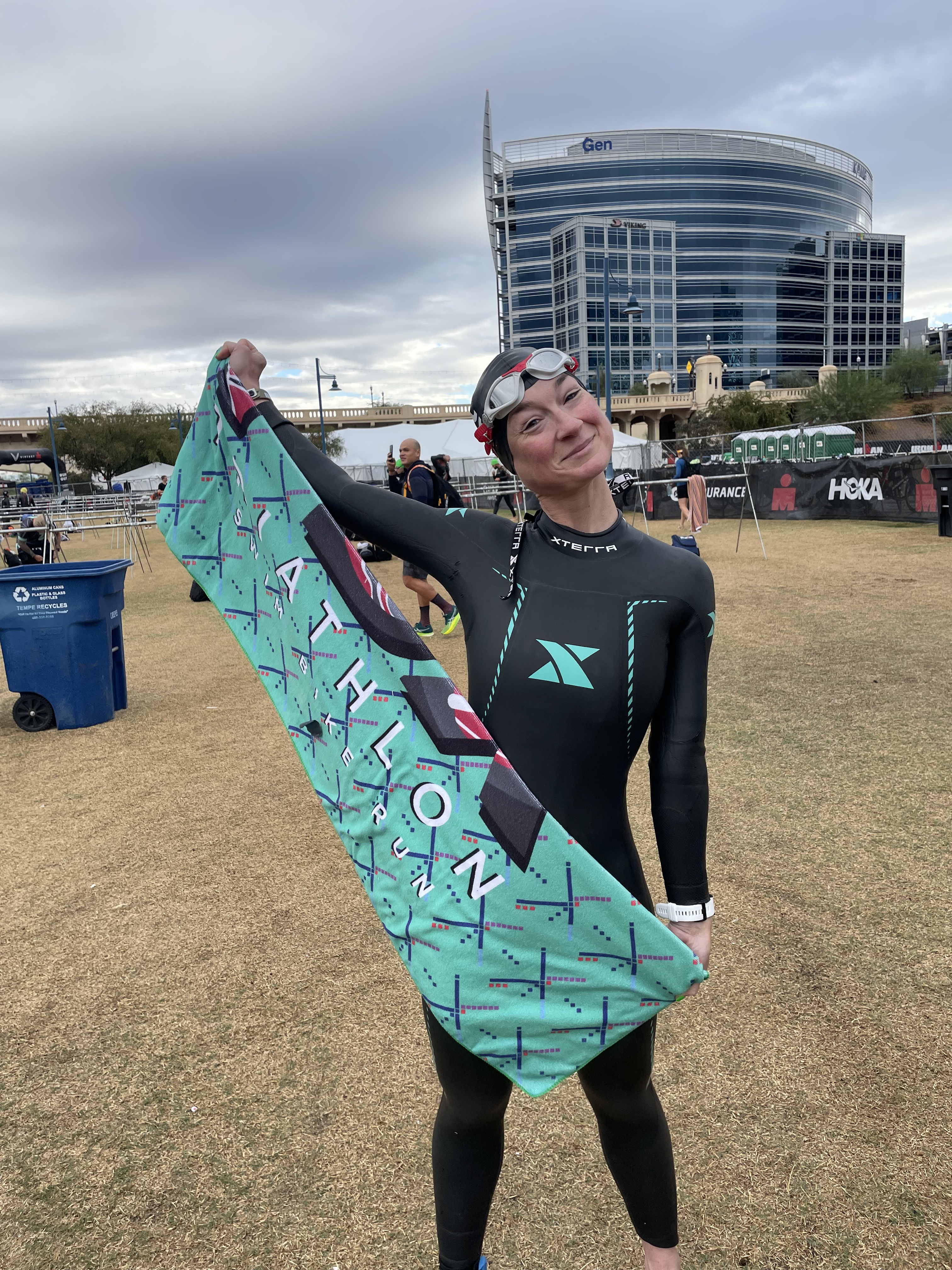
Jess before Saturday’s practice swim

● WERE THERE ANY SURPRISES OR UNEXPECTED MOMENTS THAT STOOD OUT TO YOU DURING THE EVENT?

JESS: Since this was my first Ironman race I don’t think there was anything unexpected because I didn’t really know what to expect. The only real unexpected moment was my own reaction to the OWS practice.

SCOTT: I was surprised (when I shouldn’t have been) at how strong that wind can get on the Beeline. 20+ mph gusts are no joke.

● HOW WOULD YOU DESCRIBE THE IMPACT OF THE VOLUNTEERS AT THIS EVENT?

JESS: The volunteers at this event were some of the BEST volunteers I have encountered in an endurance event. Not just one aid station, but all of them, from the support kayaks in the water (shout out to the guy who talked my nerves down while I clung to his kayak within the first 100 yards of the swim) to the teenagers with pom poms dancing around on the bike section to the fully stocked aid stations on the run where high fives were handed out until the late hours of the night! I felt supported and encouraged all day!

SCOTT: There are not enough ways to thank the volunteers at this event. Incredibly well-trained, helpful, very supportive and genuinely excited to be out there for the athletes. The back of the pack got treated like royalty.

● CAN YOU RECALL ANY QUIRKY OR UNIQUE MOMENTS YOU WITNESSED DURING THE RACE?

JESS: I think Becky’s swim sign, “You Can F@&cking Swim” was probably the best thing I saw ALL DAY! Plus I heard other people pointing it out and talking about it. That was a hit!

SCOTT: This is a tough one. Every person you see has a story. Some I completely made up in my own little brain while riding or running.

● DID YOU HAVE ANY INSPIRING INTERACTIONS OR CONVERSATIONS WITH FELLOW ATHLETES?

JESS: Oh many! The run is the one place that you can really have conversations with people and hear some of their stories. There were two things that inspired me the most at this race:
1. My husband not giving up when I knew he was struggling on the run.
2. I distinctly recall passing people on the second loop of the run, they were going out on the loop and we were coming in towards the finish line. I knew they probably weren’t going to make the run cutoff as they had 3-4 miles to go and only about 20 minutes. I heard one of them say it wasn’t going to happen. But they still kept going. They were still smiling and just forging ahead. That is the thing I love about endurance sports: there isn’t always a line of win or lose. All of us are out there for our own reasons and our “winning” may mean crossing the finish line or maybe it just means not giving up on our selves.

SCOTT: My wife and sister kept me focused, inspired, motivated and in the mile I was in. This is a really really good way to be successful in an endurance effort.

● COULD YOU SHARE WHAT IT FELT LIKE WHEN YOU ENTERED THE FINISHER’S CHUTE AND HEARD YOUR NAMES CALLED OUT?

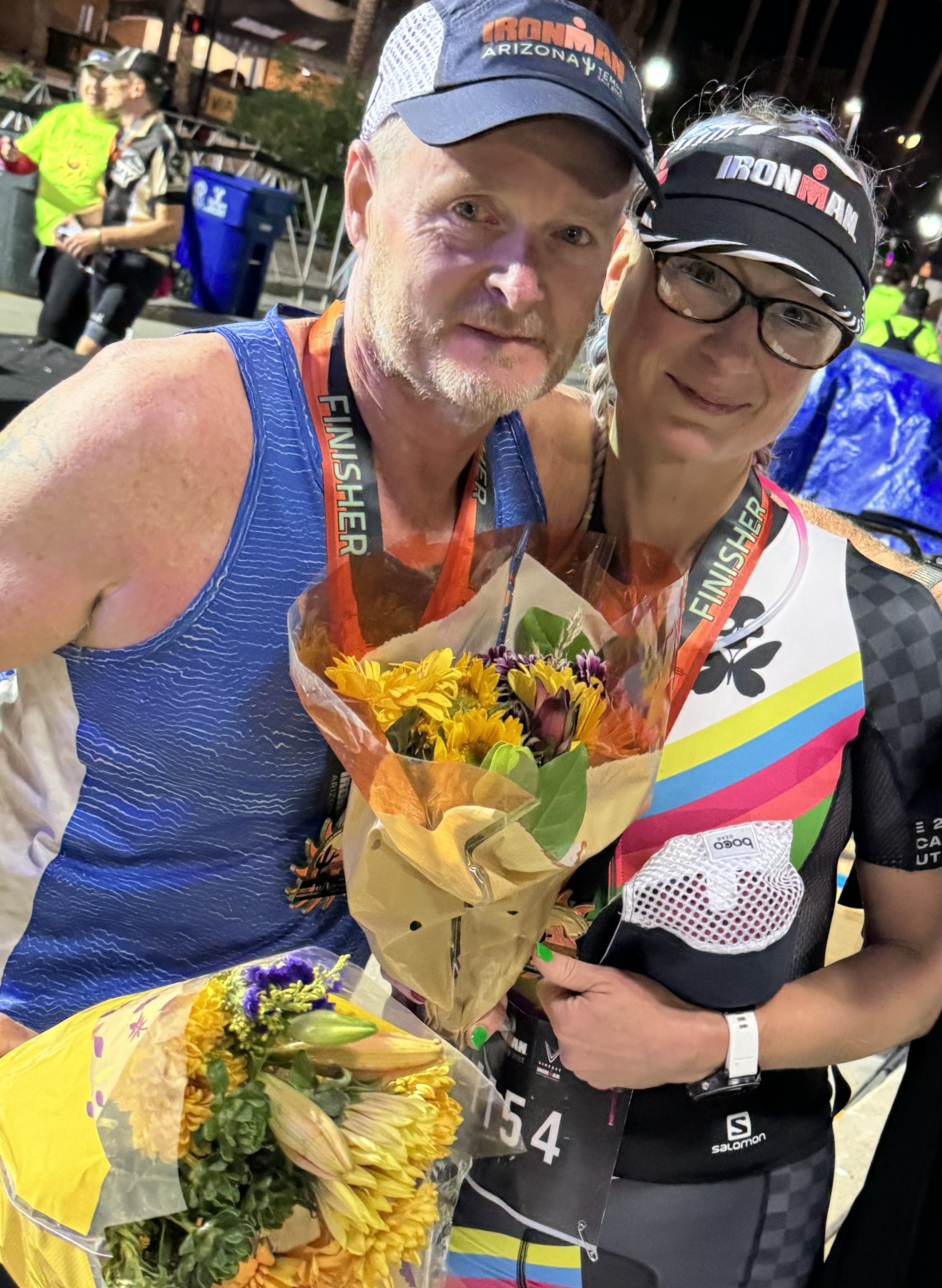
JESS: I had been literally saying out loud to myself during the entire race “Jess, You are going to finish,” so when we crossed the finish line together, I just looked over to see the look on Scott’s face because I was so proud of us!

SCOTT: I’ve crossed a few finish lines, but I’ve never experienced a finish line like that. Energy, excitement and really nice people to assist with the “race brain” that I had. I’m so grateful for the organizational efforts to make that finish such a great experience.

● REFLECTING ON THE RACE, IS THERE ANYTHING YOU WOULD DO DIFFERENTLY NEXT TIME?

JESS: I might be the minority with this, but I rarely look back at a race or training phase and think “I would do *blank* differently if I could do it over.” I kind of like stumbling and learning and having “bad” moments to laugh at later. All the hard stuff makes me stronger and is such a big part of the whole story! Some races are a big physical win and some are a really big mental win! Either way, I gained something!

SCOTT: Not much. It turned out to be one the best race experiences I have had. I think I can attribute that more to being lucky enough to train for 16 weeks side by side with my beautiful wife followed by coming across the finish line together after she saved my race by pacing me. That, and having the most incredible sister in the world on route all day, providing coaching, support and a kick in the ass during a few low spots running.

CAN YOU SHARE A SNIPPET OF YOUR JOURNEY LEADING UP TO THE RACE AND HOW THAT IMPACTED YOU?

JESS: So much training! But I really love that aspect. I didn’t know I would fall in love with cycling. That came as a surprise and I am so happy that I did because I have so many new adventures planned now. My main takeaway from the experience as a whole is that if my husband and I can get through training AND racing together. We can get through anything life brings. We didn’t just get better at swim, bike, run. We got better at comprise, gratitude, patience, expectations, and argument resolution… all the things that come up along the way we grew those skills too and it left us stronger individuals and a stronger couple.

SCOTT: I know I’ll be sorting out all the people I’m grateful for after this race. This list is long and the reasons are many. Some are professionals that provided very clear guidance and training plans. This included everything from nutrition, to forcing me to rethink my own training patterns (not an easy task I might add). Other professionals provided clinical help when my worn out parts were getting cranky. They not only encouraged me to race, they helped with finding me the resources I needed with literally days before the race. Others just knew how to help me in simple words of encouragement. It’s going to be a long time before I forget about this experience, and yes, I’m already trying to figure out what the next big challenge will be.

● WHAT ADVICE WOULD YOU OFFER TO SOMEONE CONSIDERING TAKING ON AN IRONMAN OR A SIMILAR ATHLETIC CHALLENGE?

JESS: My advice to athletes going into any kind of endurance sport or race is to take your time in training. Don’t try to squeeze it all into 3 or 4 months. As an ultra distance run coach, I know the importance of proper progression to avoid injury. Your cardiovascular fitness and muscle endurance will adapt much faster than your joints and ligaments, which take longer. Pushing too far too fast can lead to frustration, burnout and injury. Besides, your training takes exponentially longer than race day so you should plan to make it as fun as possible, creating those memories along the way!

SCOTT: Before anything else, just decide you’re going to do it. Don’t hold back. Don’t wait, Don’t think you’ll get another chance, Don’t wait until it’s more affordable.
A) Make sure you have the support of your family. It’s a big time commitment.
B) Get a coach. Best money spent. So much second guessing was taken away.
C) Trust the training. Especially during the taper and race week.

And that’s a wrap for Ironman Arizona 2023. I hope you enjoyed reading Scott’s and Jess’ experiences. I’m sending a huge shout out to both of them for taking the time to share their thoughts, especially in the midst of their busy lives. One thing that made me smile from ear to ear is that less than a week after crossing the finish line they texted me asking which Ironman they should do next (and hinted at pulling me along for the ride)! Looks like they might have gotten hooked!

Stay tuned…x Becky 🙂

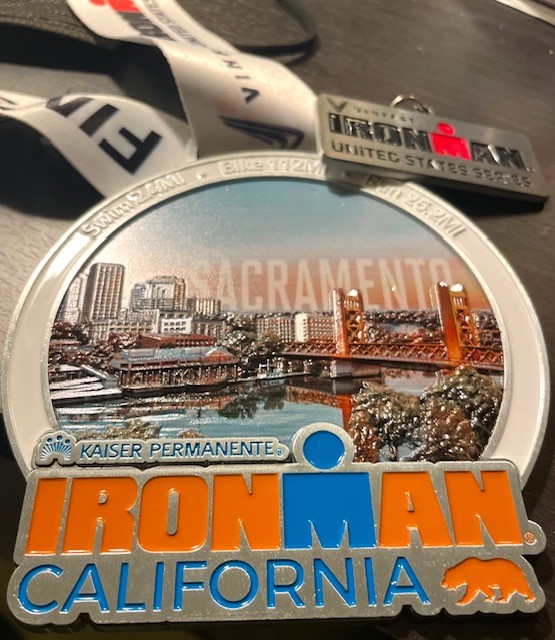
Ironman California 2022 Race Report

“Just. Keep. Moving. Forward.”

Those are the words I repeated over and over throughout the day.

Also, “Breathe and believe,” which is something I had written on my aerobar hydration bottle ahead of the race so I would have it front and center throughout the bike portion.

I knew I’d have to rely on mantras and other mental toughness strategies at least a few times during this race, but Ironman California proved to be even more epic than I had imagined, even though it was a flat course and I had trained for it for ten months.

Before I share the details of the race though, I want to express my deepest gratitude for all the good things this year of training has brought. So much joy in pushing forward, doing the hard work of healing broken wings, and rediscovering how much fun it is to push outside my comfort zone. I couldn’t have done this without the unwavering support of my number #1 support crew, Jeffrey and Olivia, and my incredible coach, Matthew Tague. Thank you from the bottom of my heart.

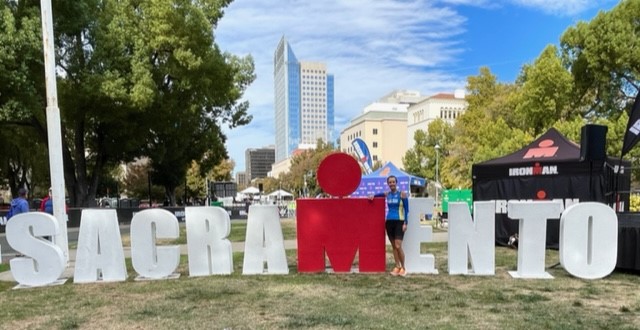
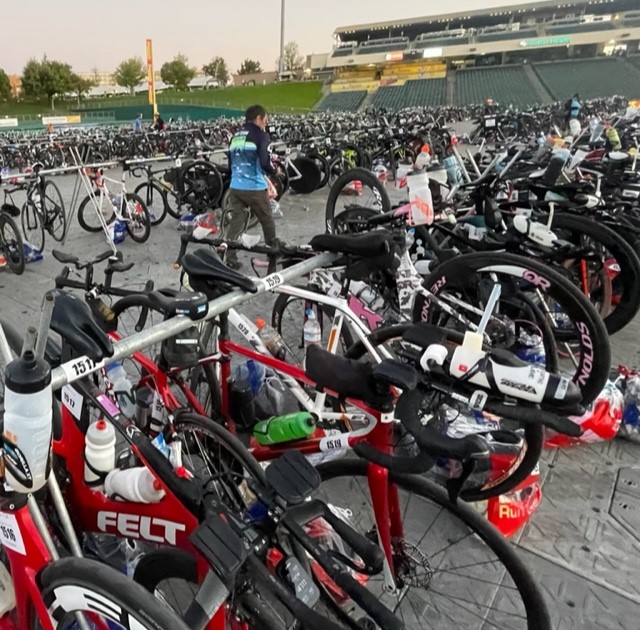
Now to the race…IMCA was massive, with nearly 3,000 participants. The transition area was held in Sutter Health Park, a large baseball stadium near the Sacramento River. The day prior to the event we racked our bikes and dropped off our bike and run bags. Experiencing the scale of the transition area made me both chuckle and contemplate the best way to tackle this beast during the race. I made sure to at least memorize my row and identify landmarks in the stadium, knowing I’d be fuzzy after the swim and bike.

RACE MORNING: I awoke at 2:00 am filled with excitement. Race day had finally come!!! I drank my beloved coffee (aka elixir of the gods), ate breakfast (not easy), stretched, foam rolled and got my mind and body ready for the long day ahead. Jeffrey and Olivia arose at 3:00 am to take me to the transition area at 4:00.

After arriving at the stadium, receiving good luck send-off love and hugs from my peeps, I stood in line with other early bird athletes before beginning the long walk down to where all the bikes were racked at the bottom of the stadium. There I pumped up my bike tires, filled my bottles, and double-checked my gear. Next I dropped off my “Personal Needs” bags with volunteers a block away. Each athlete has a bag they can access half way through the bike course and another one for the run course. You try to put things in that will keep you going if/when things get tough (spare tube, food, band-aids, chamois cream, Advil, arnica, Tums, sunglasses, long-sleeved shirt, Red Vines, etc.).

Next I boarded a shuttle bus at 5:00 to get to the start of the swim on the American River. I was happy I got on one of the earliest buses because I heard later the shuttle situation turned nightmarish, with some people arriving just minutes before the start of the race, and some even after the race started. This was Sacramento’s inaugural IMCA, so first year event kinks will certainly be worked out for next year.

I tried to keep warm while waiting for the 7:00 am swim start, hopping up and down and from foot to foot, still shivering uncontrollably, even wearing my wetsuit. No matter, I enjoyed meeting other athletes and sharing our nerves and excitement as we anticipated finally getting this party started.

I also heard numerous stories about last year’s Ironman California, which was cancelled just as the race was about to start. The story goes that everyone was standing in their wetsuits waiting to enter the water when a massive bomb cyclone hit. The torrential rain and wind made it too dangerous for the event to take place. All I could think about was the time, energy, effort, and finances all those athletes (and the Race Director) had invested, especially those who had traveled from overseas. It was devastating, but a year later, those who came back had great humor and perspective about it all. True IronSpirit on display.

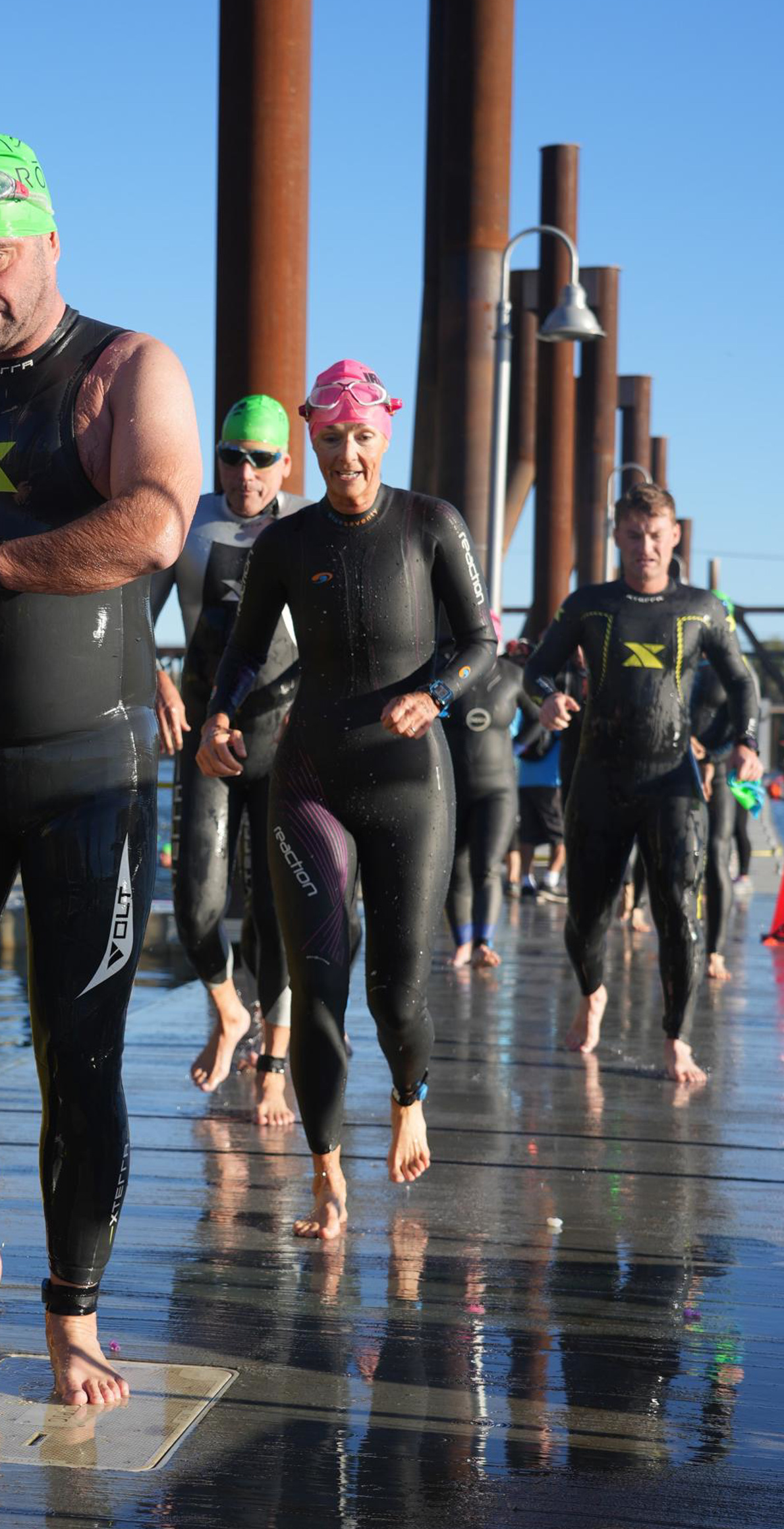
SWIM: Those stories made me especially thankful when my wave finally started at 7:35. I was also grateful that instead of a chaotic mass start, it was quite civilized, with five athletes walking across the timing mats and entering the water every 5 seconds. With the humidity and cool air temperature, the 65 degree water temperature felt nice.

All in all, it was a great swim, even with the small yellow buoys many people struggled to see, and the one large orange turn buoy at the convergence of the American River and the Sacramento River that drifted in the water so we had to try to swim upstream a bit to get around it. With the river current, which felt oddly imperceptible most of the way, every athlete I heard from PR’ed by insane amounts. I took nearly a half hour off my last Ironman swim, which was an uplifting way to start the day.

TRANSITION 1: The transition from the river back to the the bikes was about .75 miles up long ramps, then on to concrete, then across the street, and finally on to rough textured flooring in the stadium. This pretty much erased all the time saved in the river, but how can you complain after a swim like that? I was happy I had placed some old shoes by the swim exit in the dark hours of the morning, because running barefoot on concrete seemed like a really bad idea after having had a foot injury not that long ago. Although I had little hope they’d still be there when I got out of the water, after the wetsuit strippers peeled my wetsuit off for me, I spotted them (!!!) and did a happy dance before I slipped them on and headed back to the stadium, but not before soaking up a joyful moment seeing Jeffrey and Olivia and hearing them cheer their hearts out. I love my people! The. Best. Support Crew. Ever.

Inside the top deck of the stadium, I grabbed my bike bag with all my gear and ran all the way over to the changing tent on the other side of the stadium.

After quickly drying off, slipping on my tri top, arm sleeves, and a light wind jacket (trying to warm up after the swim, and not wanting to waste energy being cold on the bike), I donned my helmet and glasses, jammed my wetsuit and swim gear in a bag, then ran down to the bottom of the stadium once again to drop my bag and get my bike. This time I was shuffling in bike shoes. Good times. All told, we ran an extra 1.15 miles in T1 before we even mounted our bikes. We all laughed about it (some cursed), but in the end, it was all part of the challenge.

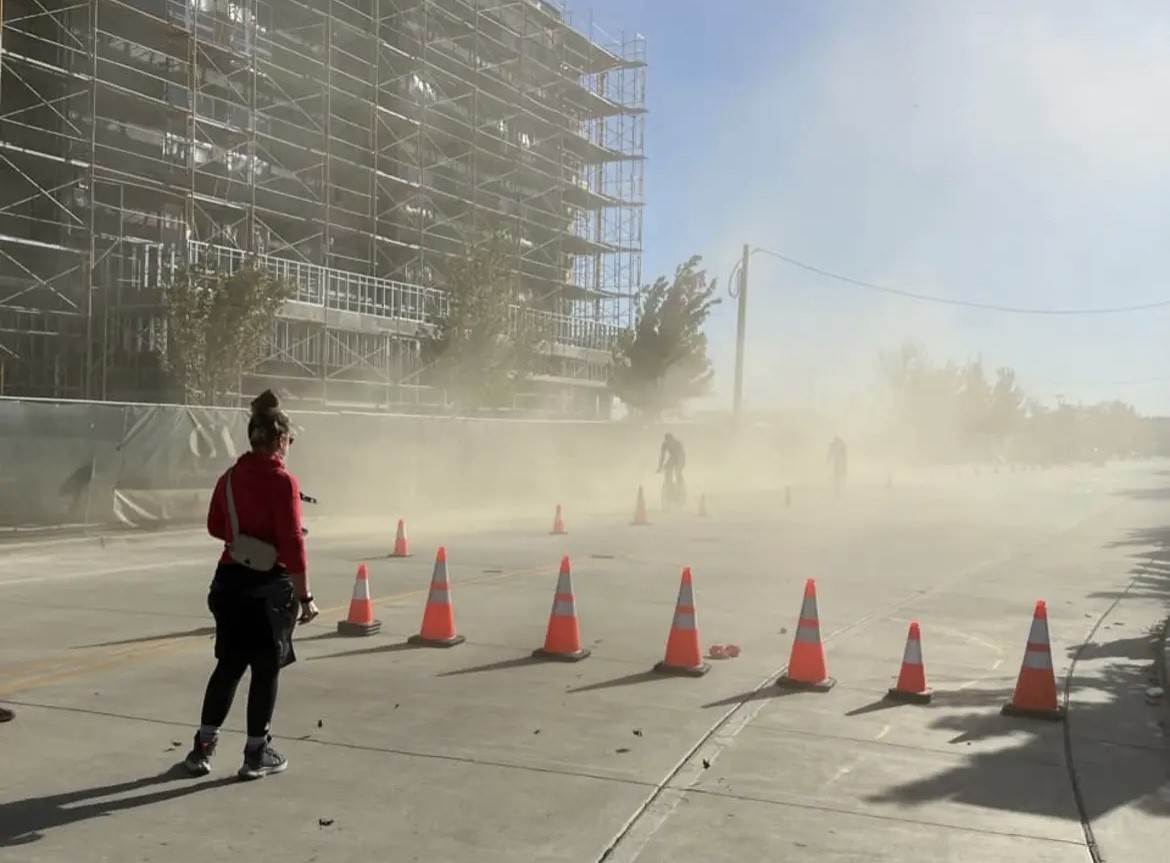
BIKE: Next came the real challenge of the day–the wind. It had been perfect conditions the day before, and it was once again the day after the race, but on event day, there were sustained winds of 20-22 mph with gusts of 32-37 mph coming from all directions as we made our way from the city out into the open farmland area along the delta. It turned the two loop 112-mile ride into a sufferfest at times. If it had been a headwind one way and a tailwind the other, that would have been much less brutal, but this came head-on, sideways, head-on again, a tiny bit from behind, then sideways again and head-on all the way back. Yeehaw!

Without the wind, it would have been a lovely ride, as it meandered along the delta, through a pretty rural area on mostly nicely paved roads. I tried to look up and soak in the views as much as possible, and also marvel at some of the other athletes–especially the blind athlete powering along on a tandem and the elite athletes blasting past like rockets. At times though, it felt like we were riding through a historic photo of the Dust Bowl with dust swirling and tumbling, bottles and debris flying from aid stations onto the course. I have never gripped my aerobars so hard for so long. As I write this, my jaw is still sore from clenching my teeth for hours. I was just thankful I didn’t get blown over, which nearly happened on more than a few occasions. I saw several bad crashes during the day on the narrow two-lane road we navigated, which on this day did not feel quite adequate for the number of athletes, especially with steep drop offs in places, and a long section of rough road through Babel Slough, which was littered with broken hydration bottles throughout the day when cyclists hit a pothole hard and launched their hydration system from their bikes.

There are many things you can’t control in an Ironman, and weather is one of them. The only thing you can do is focus on what you can control–things like your attitude, your fueling, and clothing choice. Because it was often hard to safely ride with one hand and try to eat with the other, I ended up stopping more than I had planned. The last thing I wanted to do was take out another rider by losing control of my bike.

The toughest part mentally was knowing we had two loops to do when the first one was a beast. I was grateful Coach Matt and I had talked on the phone the day before the race. He told me to keep in mind that when things get tough, remember it won’t last forever. I repeated this over and over in my head as well as, “Just keep moving forward.” I was also happy that he reminded me to focus on maintaining a moderate to high cadence rather than grinding out the miles in a harder gear, which would have torn up my legs for the run.

The volunteers were the biggest heroes of this day. They were out there for hours for all of us, always smiling, helpful, encouraging, even when it was unpleasant. I thanked them profusely every time I stopped. Not only them, but people who were just out there for the day cheering us on. One trio of older women will forever be seared in my mind. They were standing on a corner where there was absolutely nothing around them (the area reminded me of the scene at the end of Castaway when Tom Hanks is delivering a Fedex package to a woman in Texas where there’s absolutely nothing but open space and dusty roads–IYKYK). Their hair was whipped up into crazy ‘dos from the wind, but their hooting and hollering as well as their bright lipstick, bright shirts and even brighter smiles lifted everyone out of their misery as they passed by them. Just incredible.

As I mentioned, the course was flat, which I thought would take 6.5 hours on a good day, 7 hours on an average day, and maybe 7.5 on a tough day. It ended up taking me 8 hours 23 minutes. My experience was similar to many other athletes. Even though it was soul-sucking at times, the positive part is that I never completely fell apart. It was just a grind. I stuck to my plan, focused on fuel and hydration, kept my head down, and just kept going until I got it done. Having said that, I can honestly say I’ve never been so happy in my entire life to be off my bike.

TRANSITION 2: Back in transition, I gleefully re-racked my bike and re-set my mind. The wind was still a factor, but my feet were back on solid ground, so I was feeling positive, even if I had expended far more energy on the bike than I had planned. Running shoes on, fuel belt on, visor on, it was now “Time to suck it up Buttercup, and get this thing done.”

RUN: Seeing my people again and having Olivia run alongside me for a few steps while cheering me on, helped lift me up, as did knowing there were only 26 miles left to go. As the sun set low, I settled into my run pace, which also included walking for a minute every mile.

This run course was a toughie mentally, especially since I started it as the sun was nearly setting, and there were few easy places for spectators to cheer after the first few miles. I’m guessing earlier finishers may have enjoyed the run much more than I did, but I did try to focus on the positives as much as possible, like the pretty sunset, the amazing volunteers, and all the other athletes overcoming their demons and powering on like champs. It became a huge stretch though, as we were sent down several long “out-and-backs” on dark, desolate paths through some sketchy areas of the city (along the freeway and in parks with encampments and no lighting). I was actually humming the banjo song from the creepy 1970’s Deliverance movie through parts of it. Ha ha. You just have to laugh, dig deep and keep on going.

I was glad I had brought a headlamp and another mini clip-on light, along with my disco shoe lights, which were a big hit. Many people didn’t because we were told it would be well-lit. My headlamp died at about mile 15 though, as did my Garmin. It was not a good tech day. At this point, a holy crap moment exploded in my head: I took so long on the bike, I need to stay totally focused to get this thing done in time, no matter what. I never imagined I’d be remotely close to the cut-off, but here I was, and without a watch, I had to keep asking volunteers what time it was, then calculate the pace I needed to keep to finish by midnight. Just keep moving forward.

My stomach was unhappy most of the run, having consumed Gatorade and gels for eight hours on the bike, along with salt pills, bananas, pretzels, dates and a PBJ halfway though. Ack. Balancing what and how much to consume on the bike in preparation for the run is an artform, which I clearly still need to master as the fourth discipline of endurance triathlon–especially when riding for so much additional time. I mostly chewed gum, then Tums and drank water on the run until I reached an aid station with chicken broth (THE best), then Coke, then Red Vines, which I had put in my Personal Needs bag. It was a low moment when the aid stations ran out of both Coke and Chicken broth. I tried to go back to Gatorade, but it made me almost lose my cookies. Mind over matter. Just keep moving. You are getting there!

The final push around Mile 20 took us past an elaborate homeless encampment in town playing lively music for us, which was fun and surprising. Music makes everything better. Then we reached the Capitol Mall area where the final 4 miles included multiple laps around the mall, passing near the finish line twice where you could hear the crowds, music, and announcers, but knowing there was still a long way to go, then down a weird little out-and-back in some random alley twice, then FINALLY down the finish chute.

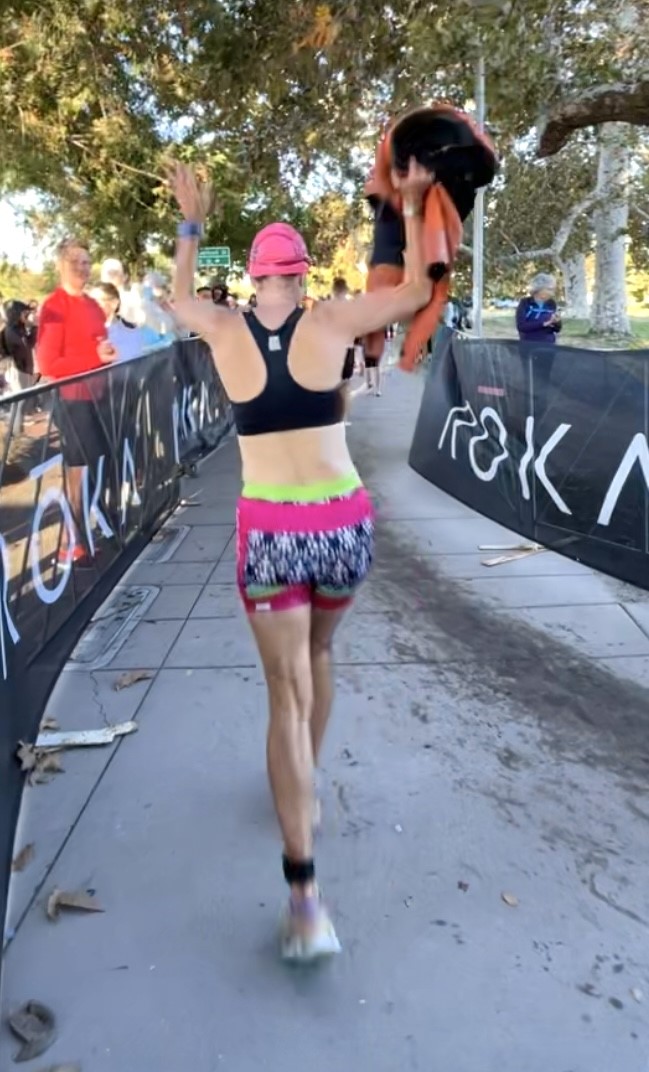
Thankfully the throngs of people cheering as I entered the chute made all the weirdness of the run suddenly melt away.

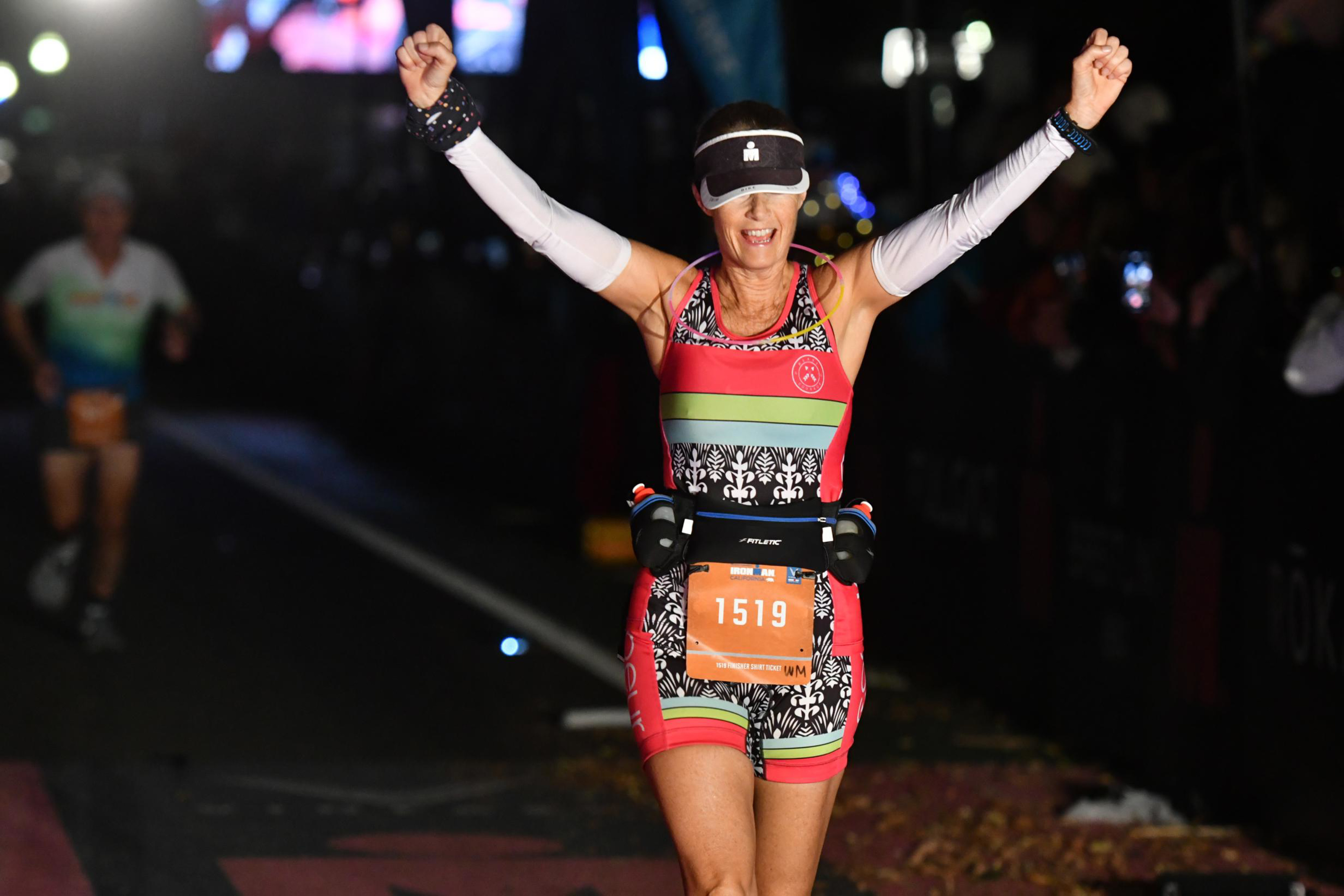
There is nothing quite as magical as the finish line of an Ironman and hearing Mike Reilly (aka the Voice of Ironman) call out your name: “BECKY AARONSON YOU ARE AN IRONMAN!!!”

Euphoria. Relief. Pride. Gratitude. Exhaustion. Honor.

Oh my god, I pulled it off!

This day may not have unfolded exactly how I was expecting, but it definitely gave me everything I needed–the joy of reclaiming my fitness, the empowerment of pushing through and finishing no matter what, and the thrill of adding a beautiful exclamation point to an incredible journey this year. Mission accomplished.

Thank you to all of you who cheered me on from near and far, and who made a difference in so many ways. And thank you to all the volunteers and event organizers. My gratitude runs deep.

xo Becky

Week 39 of Ironman Training: Why I Tri and Try

Endurance athletes are often asked, “Why?” … as in “Why in the world would you possibly want to do this?” Or “Why would you spend so many of your precious waking hours training?” Or “Why would you put your body through this?”

Everybody’s answers are different, or course, for pursuing an Ironman, an ultra or any other endurance event, and many reasons are complicated, but almost all involve the joy of a challenge and the pursuit of health and fitness while pushing personal boundaries.

My reason for tri’ing involves all of those things, but on a more basic level, it all comes down to one simple reason: I do it because I can.

At 50, I still have the outrageous gift of health, which I never EVER take for granted– especially having a father who only lived to 51 and mother who only lived to 70. Many people take this gift for granted and quickly discover their lives become more and more limited.

Being healthy, trying new things and pushing well beyond my comfort zone makes me feel alive like nothing else. As does being scared poopless and figuring out ways to keep moving forward, despite it. That’s why this Ironman journey is so meaningful to me.

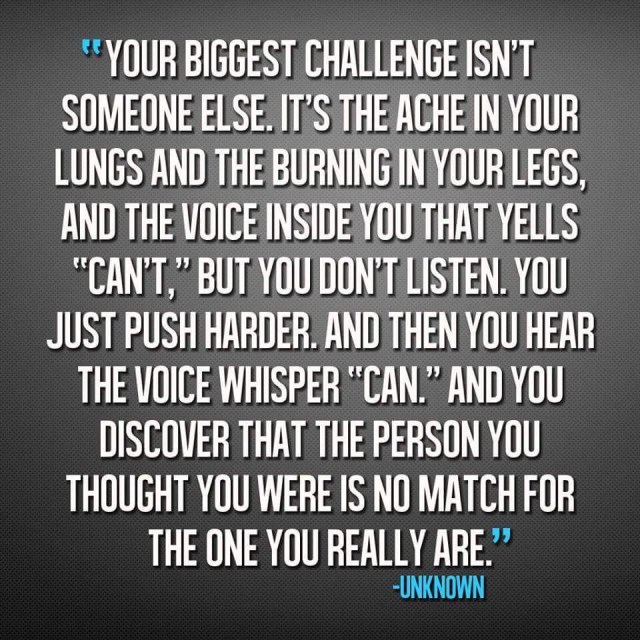
biggestchallenge

The other “Why” I get is, “Why would you add fundraising and philanthropy to your plate when you’re already performing a juggling act trying to find enough hours in the day to train while writing and managing all of life’s other joys and responsibilities?”

The simple answer is “Because I can.”

Being able to do something for somebody else, and help make a difference in the world, even if it’s a tiny difference, is really what it’s all about. People helping people–plain and simple.

The bigger question is why wouldn’t you help if you could? Why wouldn’t you help a little cutie pie who had the misfortune of being born with a cleft lip or palate? Why wouldn’t you try to piece together $250 for a 45-minute surgery that would completely change the trajectory of his or her life?

SmileTrainPicWhen I joined Smile Train’s Team Empower, my goal was to meet the team minimum of raising $5,000, which would provide new smiles for 20 kids. Anybody who knows me though, knows that doing the minimum isn’t my style. Like all of you, when I’m in, I’m in 100%. In this case, I’ve decided I’d like to be in 140.6%, in honor of the 140.6 miles I’ll be tackling on November 20th in Tempe. If I meet that goal, that means 28 kids will receive life-changing surgery. How cool is that?

Once again, it comes down to, “If I can do more, why wouldn’t I?”

With just 49 days to go (!!!), I’m reaching out to all of you to ask for your support. If 10 people donate just $25, another child will be able to face his or her future with a bright, confident smile instead of being kept out of school and hidden away in shame. That, my friends, is big stuff. You don’t have to be wealthy to help make a big change in someone’s life. You just have to be willing to say yes when small opportunities arise. This is one of them.

I hope you will consider contributing. Together, we truly can make a difference.

Here’s the link to my fundraising page: BECKY’S SMILE TRAIN. It only takes a minute to donate. And don’t forget, anybody who donates $250 will be entered into a drawing for a $100 Amazon gift card. Those who donate $125-249 will be entered into a drawing for a $25 gift card.

•  •  •

Now that I’ve shared the reasons I tri and try, I thought I’d let you in on a bit of fun news. This email arrived from USA Triathlon on Wednesday. It seems I’ve qualified for the 2017 National Championships in Omaha, Nebraska. Talk about a surprise! I’ve heard Omaha is one of our country’s garden spots, so perhaps it might be time to venture to Nebraska. 🙂 Who else is going to Omaha in August?

usatchampemail

The other exciting thing that happened this week is that my tinted goggles finally arrived! After two races of swimming into the sun completely blind, this totally made my week. It’s the little things, I tell you. You may remember when I first started training, it took me months, and at least 6 pairs of goggles, to find ones that fit my face. These are slightly bigger than my clear ones, which are women’s, but it seems they don’t make tinted ones for women (really?). The dork factor is high with these, but fortunately, they work. Hallelujah!

aquaspherevistagoggles

As I keep on keepin’ on with my training and fundraising, here’s what last week’s schedule looked like:

Monday: Rest/recovery day
Tuesday: Swim 40 minutes
Wednesday: Run 2 hr 20 min (14 miles)
Thursday: Swim 45 minutes, Bike 1 hour on the trainer
Friday: Run 30 minutes, Swim 30 minutes
Saturday:
Bike 5 hours (80 miles)
Sunday:
Rest/Recovery

Here are a few snaps from the week…

Wednesday’s long run was a hot one, as I intentionally ran in the heat of the day again to get my body accustomed to the challenge. It also gave me the opportunity to dial in my hydration, nutrition, and salt intake–all crucial things when you’re going to be in motion for hours (and hours…and hours).
runleadbetter92916

run92816
It said 79 degrees, but it felt more like 89 to me.
runtemp92816
Besides running in the heat of the day, the other thing I did was run the entire 14 miles on concrete and asphalt to simulate the pounding my body will take on race day. Up until now, I’ve mostly been running on grass and trails to try to avoid injuries, with a few miles of asphalt mixed in along the way. The IMAZ run course is similar to our bike path along Cabrillo Blvd–lots of concrete. After doing this run, I remembered why I hardly ever run on this unforgiving surface anymore. From here on out, I’ll have to be extra smart with recovery. Ice may become my best friend. 🙂
runconcrete92816
Luckily the next day was a pool day…
swim92916
And a bike trainer day…

trainerride92916
It was nice to be able to spin and crack open this new book, which I’m enjoying.

trainerridebook92916
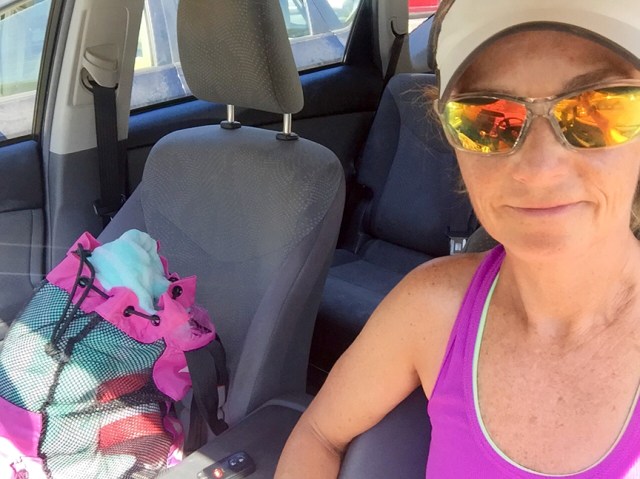
Friday was another swim and run day. Sometimes I feel like I live out of my car as I’m always headed somewhere with a swim bag or a bike and always a plethora of water bottles.

swimbag93016
Before my swim, I did a quick shake out run from the Y in Montecito down to the Biltmore and back.

rungarmin93016
It was another beautiful, warm fall day.

run93016ybridge
Sometimes I missing having real seasons in California, but it’s hard to complain when you get to train on days like this.
run93016sanysidro
Yesterday morning I set out early on my 5 hour ride. It was a spectacular day and another great opportunity to practice everything I’ll be doing on race day, especially my nutrition, which is the crucial fourth element of triathlon. I’m learning it’s all about timing and focus, ingesting calories and carbs before you’re hungry (not always easy) and staying ahead of dehydration and salt depletion. You can’t just space out and let your mind wander or you’ll pay the price at the end of the bike and/or on the marathon run.

Breakfast was the first order of the day. To properly fuel and avoid gut issues, most people have to get up and eat at least a couple hours before working out so everything has a chance to digest. For me, this meant 4:45. Even two hours early wasn’t quite enough time for my stomach, so it looks like it will be a 3:00 am wake-up call for me on race day.

sunrisebike10116
I began my ride at East Beach and pedaled down to the Rincon area, 20 miles away, then looped back around and did it all again. The IMAZ bike course is a series of three 37-38 mile loops, so I thought it would be a good idea to simulate the course and also keep working on my mental game. Yesterday’s ride had a few more hills than Tempe, but it’s the flattest course I can find around here. Doing loops also helped with logistics as I could replenish my hydration after the first loop. I apologize for the TMI here, but the biggest challenge with drinking 128 ounces in 5 hours is that you have to pee A LOT. I’m told that athletes just go on their bikes during the race (eeew), but I wasn’t quite ready to practice that just yet, so having a bathroom at East Beach was also appreciated. 🙂
waterbottles
rinconride10116
bikerincon10116
It was a gorgeous morning, and although a few parts of my body were being cranky, I was still smiling, knowing I’m one step closer to crossing the finish line in Arizona.
smiletrainbike10116
As we head into Week 40 of training, I’m staying focused on the process — one day, one workout at a time, and doubling down on nutrition and all things recovery-related. By focusing on the process, or journey, rather than the outcome on November 20th,  I will stay in the moment and enjoy what I’m doing while I’m doing it–even if it is a sufferfest at times.

I’m also going to focus on raising funds for 8 more kids so they receive life-changing surgery from Smile Train. I can think of no better fuel to keep me going! If you feel so inclined, your contribution would mean A LOT. Once again, here’s the link if you’d like to help make a difference: BECKY’S SMILE TRAIN.

Thanks for your support and generosity and thanks for continually being there for me! Sharing this journey with you has been one of my greatest joys.

Until next time…
xo Becky

Smile Train Ironman Arizona

PS: As always, if you missed any of my previous posts about Ironman training, you can click on the links below:

Kicking off My Journey to Ironman Arizona
Week One of Ironman Training: Believe
Week Two of Ironman Training: The Power of Friends
Week Three of Ironman Training: I Think I Can
Week Four of Ironman Training: Progress
Week Five of Ironman Training: Wind at my Back (and Front) and Peeps by My Side
Week Six of Ironman Training: Baking a Cake
Week Seven of Ironman Training: Courage
Week Eight of Ironman Training: It’s All About the Base
OMG, You did WHAT?! (AKA Sleep Deprivation + Training = Embarrassing Moments)
Week Nine of Ironman Training: Growing Pains
Week Ten of Ironman Training: Trust
Week 11 of Ironman Training: Speedbumps and Breakthroughs
Week 12 of Ironman Training: A Bundle of Sticks Can’t Be Broken
Week 13 of Ironman Training: Spring!

Week 14 of Ironman Training: Rollercoaster
Week 15 and 16 of Ironman Training: Staying Happy and Healthy

Week 17 and 18 Ironman Training: Inspiration and Purple Rain
Weeks 19 through 21 of Ironman Training: Transitions

Week 22 and 23 of Ironman Training: Holy Epicness…Julie Moss
Week 24 of Ironman Training: Consistency is the Key
Week 25 of Ironman Training: Embracing New Challenges
Week 26 of Ironman Training: Hills, They’re What’s for Breakfast, Lunch, and Dinner
Week 27 of Ironman Training: Taking This Show on the Road (Tri-cation!)
Week 27 of Ironman Training: High Altitude Tri-cation
Week 27 of Ironman Training: High Altitude Fun Continues
Week 28 of Ironman Training: Rocky Mountain High
Week 28 of Ironman Training: Finishing Aspen Strong
Week 29 and 30 of Ironman Training: Rollercoasters, Crazies, and Comebacks
Week 31 of Ironman Training: New Heights
Week 32 of Ironman Training: 100 Days to Go
Week 33 of Ironman Training: The Art of Recovery and Balance
Week 34 of Ironman Training: The Magic of Firsts
Week 35 of Ironman Training:Chasing the M-Dot with Toughness Training
Week 36 of Ironman Training: Miles of Opportunities
Week 37 of Ironman Training: IMAZ Training Camp and Tempe Tri Race Report
Week 38 of Ironman Training: Much to Celebrate and Carpinteria Race Report